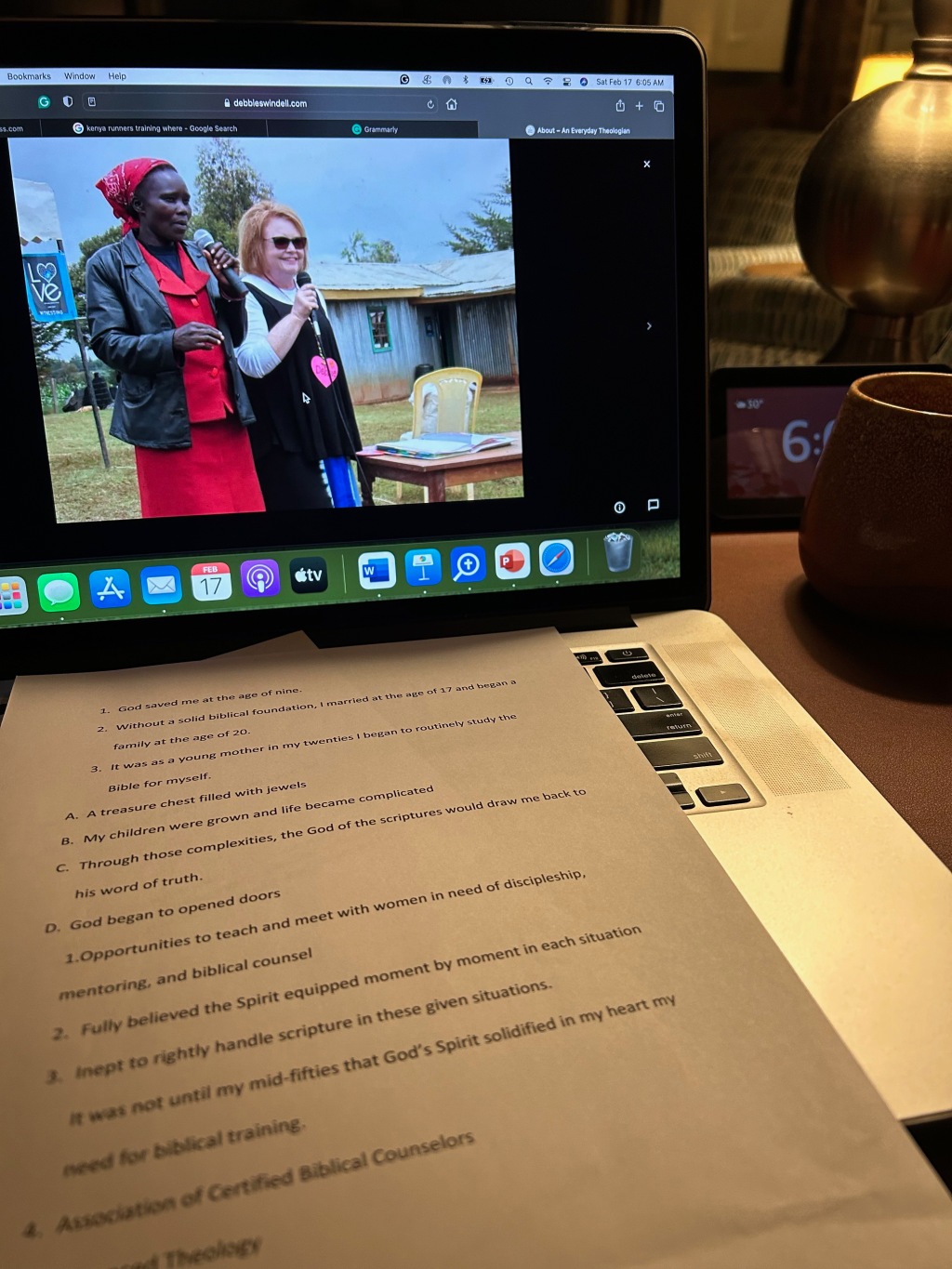
I was new to international travel and felt out of my element. The Kenyan women had gathered in large numbers and walked along the dirt roads, eager to hear what we had to say. Despite feeling somewhat inadequate, I shared my story, hoping that it would point to the glory of God and serve as a tool for evangelism. Testimonies are most impactful when they focus on the Lord rather than the believer.
My testimony was instrumental that day. We shared it with those who came to Iten to hear from us on that day in 2014, but it mainly affected me. I knew my shortcomings and lack of words for the interpreter to work with. We would do well to record the time God saved us and know our stories.
The word testimony is rooted in Latin, referring to a third person, disinterested witness. As Christians, the term’s general use concerns how we came to Christ. We hear testimonies at baptisms, church services, church gatherings, or shared one-on-one. By sharing our testimony, we create a connection to the past and those women who know us in the present (John 21:24).
For the believer, they are built up in their faith and spurred to continue. For the unbeliever, the evidence provided becomes visible. No faith is required to see and believe everything God has done because God’s presence is logically seen. Still, hearing the result of God’s transformation as a personal experience, a direct result of God’s saving grace, gives hope and assurance. It can effectively witness the lost person when we give depth to our stories.
If we accept human testimony, God's testimony is greater, because it is God's testimony that he has given about his Son. The one who believes in the Son of God has this testimony within himself. The one who does not believe God has made him a liar, because he has not believed in the testimony God has given about his Son. And this is the testimony: God has given us eternal life, and this life is in his Son. - 1 Jn 5:9–11.
The apostle Paul’s miraculous conversion in Acts 9 is one of the most popular, but your own story does not require drama. Some are spectacular, and others are pretty simple, but every salvation story has equal value in its result. We all have a testimony worth sharing.
Now faith is the reality of what is hoped for, the proof of what is not seen. - Heb 11:1.
You might not stand before a group of Kenyan women while speaking through an interpreter, but if you are a Christian, you are called to prepare. Write your testimony and know your story. Pray for opportunities.
- Outline your testimony, focusing on the essentials.
- Recall details before faith in Christ.
- Include the truth of sin, not just individual but humanity’s sinful condition.
- Point to Christ and the work done on the cross for justification.
- Share about conviction, change, and God’s continued work today.
- Apply scripture.
Watch for opportunities during the ordinary days of your life. Pay attention to conversations and life situations. Consider how the Lord may use your testimony to further the Kingdom through your obedience and His continuing work to bring lost sinners to a holy God.
If you have not yet read my testimony, you can find it here. Since that day along the dusty roads of Kenya, I praise God that He has given me many opportunities to share what he has done. I thank him for what He continues to do in my life.







 debbieswindell.com