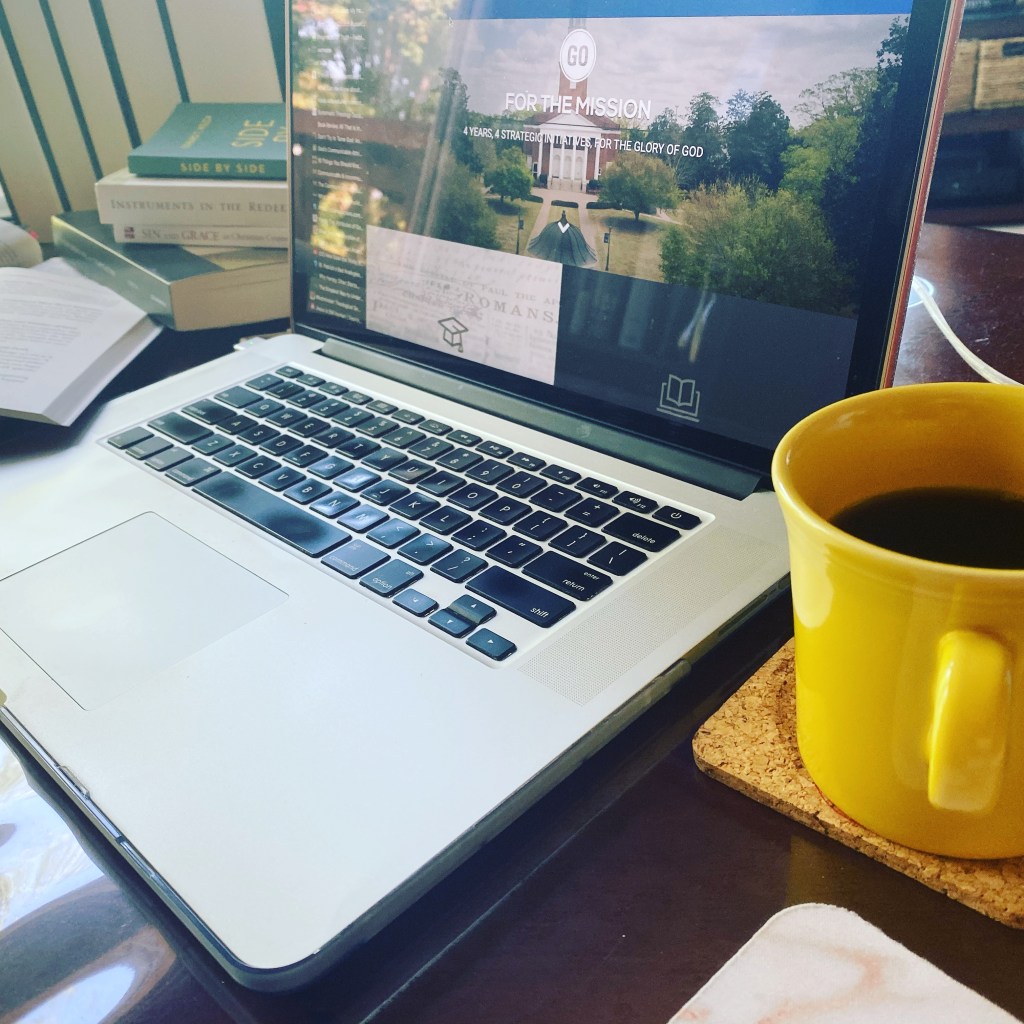
At the age of 56, I found myself sitting in a classroom for an advanced theology track in Fort Worth, Texas, surrounded by much younger men and women who were either pastors or aspiring counselors. I gripped my pen tightly and focused intently on every word spoken at the front of the room. Despite decades of Bible study and faithful church attendance, I discovered significant theological gaps as I delved into these ancient truths. In those moments, I felt a strong conviction: I needed to pursue my education further. By the grace of God, I did just that through Southeastern Baptist Theological Seminary. I had known Jesus since childhood, but it was only by immersing myself in these doctrines that I began to understand Christianity with clarity.
During this season of formal education, I gained insight into how theological views influence all aspects of life. Though it was a busy time, it was the best of times, and filling those theological gaps shifted my life’s focus. God’s purposes for me became unmistakably clear.
C. S. Lewis wrote, “I believe in Christianity as I believe that the sun has risen—not only because I see it but because by it I see everything else.” Our theology shapes how we engage with Christian faith and life.
My experiences form the perspective from which I teach, underlining the idea that the study of theology is not reserved for seminary students. Theology is something every individual should aspire to understand. Dr. Mark Bowald defines theology as “the study of God, God’s character, God’s actions in relation to the cosmos, and especially God’s relationship to humanity (the character and history of humankind) in its responsive relationship to God within the panorama of the world and history, space and time.” However, theology is not pursued for knowledge alone. Michael Horton explains, “From what God does in history, we learn important truths about who He is and what it means to be created in His image, fallen, redeemed, renewed, and glorified in union with Christ. As the Father creates His church in His Son and by His Spirit, we come to realize what this covenant community is and what it means to belong to it; what kind of future is promised to us in Christ, and how we should live in light of it all. The drama and the doctrine provoke us to praise and worship—doxology—together, these three coordinates provide us a new way of living in the world as disciples.”
Greg Allison adds another dimension, stating, “The emphasis of systematic theology is on what God wants us to believe and know. The primary reason for studying systematic theology is that it enables us to teach ourselves and others what the whole Bible says, thereby fulfilling the second part of the Great Commission.”
A standard approach to theology distinguishes four main areas of focus: biblical theology, historical theology, systematic theology, and practical theology. My studies and teaching primarily emphasize systematic theology, while also drawing from biblical and historical theology when beneficial. Systematic theology is not merely a Bible study (although it does require significant Scripture reading for biblical support). I contend that the study of systematic theology greatly enhances Bible study. Wayne Grudem succinctly defines systematic theology, clarifying its connection to the Bible: “Systematic theology is any study that answers the question, ‘What does the whole Bible teach us today?’ about any given topic.” Personally, my engagement with Scripture has deepened, allowing me to become a better wife, mother, grandmother, and church member. Moreover, studying theology has inspired me to love the Word and immerse myself in the Scriptures daily. Never in my life have I experienced such overwhelming joy as I do now, sitting with an open Bible and absorbing the Word of God from a robust theological perspective.
However, let me be clear: the more I learn, the more I realize how little I truly know. Howard G. Hendricks aptly frames my thoughts on learning and teaching when he states, “If we stop learning today, we stop teaching tomorrow.” I consider myself a lifelong learner, and none of us has fully arrived at complete Bible knowledge.
Since my time in formal education, I have noticed that many Christian women are content to remain at a surface level in their study of the Word. Even more concerning is the trend of women seeking therapeutic insights rather than theological truth. The therapeutic view suggests, “You’re not to blame for your flaws and faults. You’re not a sinner; you’re a victim.” There are entire women’s ministries and conferences based on these misconceptions of what Christianity is. I recognize where these women stand—I was once there myself, attending conferences, purchasing books, t-shirts, and coffee mugs. As sinners, we can all too easily replace awe of God with awe of self, and this posture of misplaced awe is often detrimental.
None of us can truly please God if we are not willing to be taught His Word. – A.W. Tozer.
Thinking and learning are essential for enhancing our worship of the One who has given us the Word. God has equipped us with minds for this purpose, and He has provided us with the Scripture through which we can know Him. We can recapture, refocus, and redirect our thinking. The more we come to know Him, the more we desire to live for His glory rather than our own. This shift transforms our understanding of the Bible from a therapeutic, man-centered perspective to a God-centered one. With this corrected outlook, we gain a lens through which to view all of life with greater joy.







 debbieswindell.com